
The Importance of Continuing Education for Breathwork Professionals
What We'll Cover
- What Is Continuing Professional Development in Breathwork?
- Why Learning Continues After Breathwork Training
- Deepening Your Facilitation Skills and Professional Judgement
- Keeping Ethics, Consent and Scope of Practice at the Centre
- Staying Informed About Breathwork Research
- The Role of Supervision, Mentoring and Peer Support
- Your Own Practice and Capacity Matter Too
- Learning Together Across Schools and Traditions
- How to Choose CPD That Fits Your Practice
- Creating a Continuing Education Plan You Can Sustain
- Finding Your Next Step
When Benedict finished his breathwork training, he was qualified and suddenly wondering what to do next.
The training had given him a foundation. But now he had to take that learning into his own work, without the regular contact with teachers and fellow students. He was working from a laundry closet in our tiny apartment in Northern Alberta, Canada in the middle of winter. To say that he felt alone is an understatement!
That experience became a big part of why he started Breathing Space: he wanted breathworkers to have people they could keep learning and practising with after their training ended.
You may recognise some of that. During training, there’s usually somewhere to take your questions. Afterwards, a question might occur to you halfway through writing a session plan, or on the way home from a group you’ve just facilitated. You find yourself thinking, “I’d really like to talk this through with someone.”
And breathwork itself keeps moving. Research is developing, more people are discovering the practice, and conversations about consent, trauma, accessibility and professional responsibility are asking us to look carefully at how we work. There’s plenty to be curious about, but there’s also plenty to sift through.
So where do you go with all of that?
Further training can help. So can a conversation with an experienced colleague, a supervision session or an opportunity to practise something and get useful feedback. What helps will depend on where you are and what you’re trying to understand.
Let’s have a look at those options: what continuing education can offer, how to choose learning that’s worth your time and money, and why having other breathworkers around you can make such a difference.
What Is Continuing Professional Development in Breathwork?
You’ve probably come across the term continuing professional development, usually shortened to CPD. You might picture a course, a certificate and another set of hours to log so that you can tick a box.
Breathwork isn’t currently a statutorily regulated profession, so there is no universal CPD requirement for everyone calling themselves a breathworker. Professional associations can set their own requirements, though, so if you belong to one, it’s worth checking what it expects.
For many breathworkers, continuing education is therefore something we actively choose.
We might encounter a question we can’t answer, notice something we’d like to handle differently or become interested in an area our initial training only touched on. CPD gives us ways to explore those things and bring what we learn back into our work.
It also asks us to take responsibility for our development. Without a single regulator setting the standard for everyone, we need to think carefully about how we keep our knowledge and skills current, recognise our limits and find support when we need it.
For a breathworker, that might mean:
Taking a course or masterclass on something you want to understand better, such as breathing physiology, consent or working with particular groups.
Bringing a question to supervision, where you can talk through your work and consider approaches you might not have thought of.
Practising with other breathworkers and getting feedback on your instructions, pacing or session structure.
Reading research and discussing what it might mean for the practices you offer.
Learning from an adjacent field, such as accessibility, safeguarding or running a business ethically.
Reflecting on a session, considering what happened, why you made particular choices and what you might do differently next time.
Some of this learning starts with the ordinary moments of being a breathworker. Perhaps you’ve explained a breathing practice and several people look confused. You explain it again, but you’re still not sure your words are helping. Afterwards, you could try that instruction with a practice group and ask: “What did you understand when I said that? What would make it clearer?”
That gives you something specific to work on, and people who can help you work on it.
Courses and workshops can offer that kind of learning too, especially when you give yourself time to use what you’ve learned. It’s easy to come away with pages of notes and then return to doing things exactly as before. Choosing one relevant idea to explore, within your existing training and scope, can help you put the learning into practice. You may also discover that you need more guidance before using it with clients.
If you’re still in training, there’s plenty of room to begin here.
Bring your questions to your teachers, ask for feedback and revisit the parts you find difficult.
You don’t need to enrol on another course to start taking your development seriously.
And if you do need to log formal CPD hours, check which activities your professional body accepts and what evidence it asks for. A simple record of what you did, what you learned and how it relates to your work can help you keep track.
Whether you’re logging hours or choosing learning for yourself, that last question is useful: “How will this help me in the work I actually do?”
Why Learning Continues After Breathwork Training
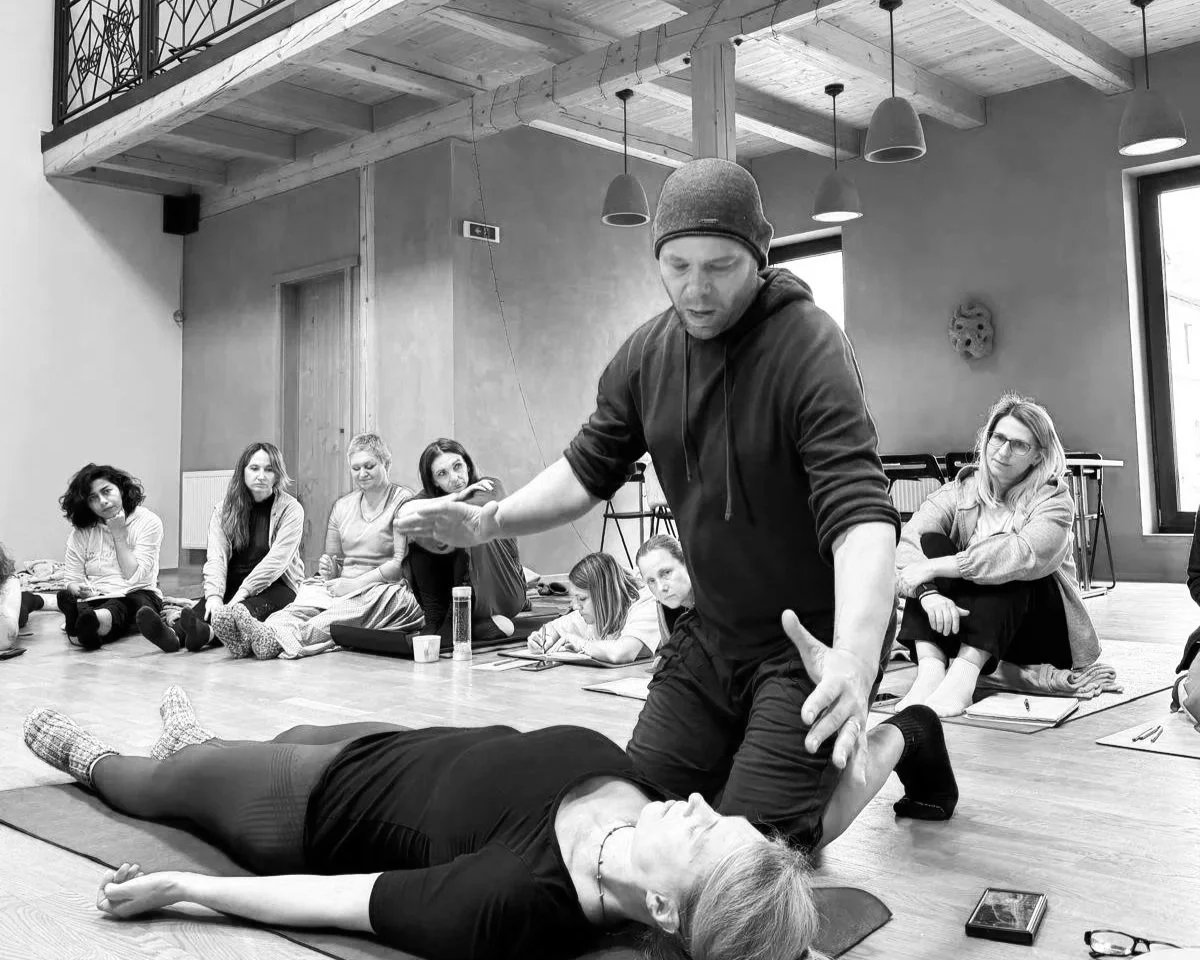
During training, you might practise guiding someone who knows the technique, understands the instructions and is happy to give you feedback afterwards. Even when things feel challenging, you usually have a teacher you can turn to.
Then you start working with people who bring a much wider range of experiences and expectations.
Someone has booked because a friend loved breathwork, but they’re fairly sceptical themselves.
Another person wants you to tell them exactly what their experience means.
Someone else finds an instruction uncomfortable but doesn’t mention it until the session is over.
These situations ask you to draw on what you learned and work out how it applies to the person in front of you. That takes practice, reflection and sometimes a conversation with someone more experienced.
You may also find that familiar material makes more sense the second time around. A discussion about boundaries can feel fairly straightforward in a training manual. Revisit it after a client has started messaging you between sessions, and you’ll probably have different questions. You have an actual situation to think about now.
The same happens with consent, session planning, breathing physiology and many other parts of the work. Experience gives you reasons to look again.
That can be really uncomfortable.
You might think, “I’m qualified. Shouldn’t I know this already?”
And that answer is no, you shouldn’t expect yourself to know everything just because you trained!
In fact, we believe that one of the most powerful things you can say is “I’m not sure but I’ll get back to you”.
These are things that are worth bringing to supervision rather than keeping to yourself. You can explore what you do know, where there’s a gap and what support would help you respond responsibly.
As your practice develops, you may become more comfortable saying:
“I’d like to check that before I give you an answer.”
“That’s outside my training.”
“We can adapt this or stop.”
“I think someone with different expertise would be better placed to support you.”
Those are useful professional skills. Further learning can help you recognise when to use them and follow through with care.
If you’re still training, you can start by noticing the questions that come up in your practice sessions and taking them back to your teachers. If you’ve been working for years, you might revisit an approach that has become automatic and ask whether it still serves the people you work with.
At every stage, there’s value in having somewhere to ask: “Can we look at this together?”
Deepening Your Facilitation Skills and Professional Judgement
Sometimes a small change in how you guide a session can make a real difference.
You leave a little more silence after an instruction.
You explain what someone can do if they want to stop.
You ask whether a suggestion is helpful, rather than assuming it is.
These are things you can explore through practice and feedback, and they deserve attention alongside learning new breathing techniques.
Take the instruction “Listen to your body” as an example. You may know exactly what you mean by it but the person hearing it might be wondering, “What am I listening for? And what am I supposed to do when I notice something?”
You could give them something more concrete: “Notice how this pace feels for you. You can make the breath smaller, return to your usual breathing or pause.”
Practising your language with other breathworkers can help you spot those gaps. Ask them to tell you what they understood, where they felt unsure and whether the choices you offered felt genuinely available.
You might discover that an instruction you’ve used for years needs a little more explanation.
Other skills worth returning to include:
Pacing: allowing time for people to understand an instruction, try it and decide whether to continue.
Observation and checking in: noticing changes without assuming you know what someone is experiencing.
Adaptation: drawing on options within your training when the planned practice doesn’t suit someone.
Group facilitation: considering individual needs alongside your responsibilities to the wider group.
Preparation and closure: helping people understand what to expect and allowing time to finish without rushing.
Responding to emotion: making room for someone’s experience without deciding what it means for them.
These skills come together in your professional judgement: how you decide what to do, when to do it and when to seek help.
Imagine someone becomes tearful during a session. Tears alone won’t tell you whether they want support, feel overwhelmed or would prefer some space. Their own experience of what’s happening in this moment is so important. Depending on the situation and what you’ve agreed beforehand, a brief check-in may help you understand what they need. You can then draw on your training and offer appropriate choices.
Afterwards, you might reflect on your response. Did you give them time to answer? Did you offer support they wanted? Were you so concerned about doing the right thing that you stepped in too quickly?
Those are useful questions to bring to supervision or supported practice. You can look at the decisions you made, hear other perspectives and identify something to try next time.
It helps to keep the focus manageable. Choose one part of your facilitation to explore and reflect upon. Perhaps your opening explanation, the way you offer choices or how you close a session. Practise it, ask for specific feedback and give yourself time to learn from what happens.

Keeping Ethics, Consent and Scope of Practice at the Centre
Some of the trickiest questions in breathwork start with wanting to help.
A client asks for support with something you haven’t been trained to work with. Someone tells you that you’re the only person they feel comfortable talking to. You learn a new approach at a workshop and feel excited about sharing it.
It’s worth giving these moments some thought before deciding what to do.
What can you responsibly offer?
What expectations are being created?
Do you have the training and support this situation calls for?
Continuing education gives us space to explore those questions, including the ones where our good intentions might be making it harder to see a boundary.
Consent needs attention throughout the work.
Someone may agree to a practice beforehand and change their mind once they’ve tried it. They might welcome a suggestion in one session and prefer something different the next time.
We need to make those choices easy to express and respond to them without persuasion or disappointment. If touch is part of your work, it deserves specific attention: how you ask, what someone is agreeing to and how they can withdraw consent. Becoming familiar with a client doesn’t remove the need to check.
Our role can carry more influence than we realise.
People may assume we understand their experience better than they do, particularly when they’re new to breathwork. The words we use can carry weight.
If someone asks what a sensation or emotion means, we can acknowledge their curiosity without supplying an explanation we cannot substantiate. We can support them in exploring their own experience while being clear about what we know and what remains uncertain.
Further learning needs to sit alongside an honest understanding of our scope.
A workshop about trauma may help you offer more choice and recognise gaps in your practice. It doesn’t, by itself, qualify you to provide trauma therapy. Learning about a particular client group may reveal how much further preparation you need before offering a specialist service.
Useful questions include:
What does my existing training prepare me to do?
Have I had enough relevant practice and feedback to apply this learning responsibly?
What support would I need?
When would a referral be more appropriate?
The way we describe our work matters too.
Our website, social posts and conversations help people decide whether to trust us. That makes honest marketing part of professional practice.
We can explain what a session involves, describe our qualifications accurately and talk about possible benefits while acknowledging that experiences vary. We also need to be careful with testimonials: one person’s experience cannot promise the same result for someone else.
These subjects benefit from being revisited as your work develops. You may understand a boundary differently after encountering it yourself, or notice a claim on your website that you would now phrase more carefully.
Our advanced training and CPD courses include opportunities to explore ethics, scope of practice and consent in greater depth. Wherever you choose to learn, look for space to ask difficult questions and apply the discussion to your own work.
Staying Informed About Breathwork Research
You see a headline about a new breathwork study. The results sound promising, and you’re tempted to share it with your clients. Perhaps it seems to explain something you’ve noticed in your own sessions.
Before you do, it’s worth looking a little closer.
“Breathwork” covers a wide range of practices. A study involving a few minutes of slow breathing each day is investigating something quite different from a longer Conscious Connected Breathwork session. We need to know what participants actually did before deciding how the findings relate to our work.
You don’t need to become a scientist to ask useful questions:
What breathing practice was studied? Look at the pace, duration, instructions and frequency.
Who took part? Findings from one group may have limited relevance to people with different needs or circumstances.
What was measured? Someone reporting less stress is a different finding from a measured change in breathing physiology.
Was there a comparison group? What did those participants do, and how did their results compare?
How long were people followed? An effect measured immediately after a session tells us something different from a change sustained over several months.
What limitations did the researchers identify? These help us understand how much confidence to place in the findings.
If reading a paper feels daunting, bring it to a learning group or ask someone with relevant research experience to discuss it with you. Working through one study together can be more useful than saving twenty links you never quite get around to reading.
It also helps to distinguish between what people experience and how we explain it.
A participant might say they felt lighter, calmer or more connected after a session. We can respect that account. Explaining exactly why it happened requires a different kind of evidence. When we offer a possible explanation, we should make that uncertainty clear.
The same applies to our own experiences. They can inspire questions and help us notice things worth exploring. They cannot establish what everyone else will experience.
Sometimes further reading will strengthen your understanding of an approach. Sometimes it will leave you with more questions or prompt you to change the language you use. That can feel awkward if you’ve been explaining something confidently for years. You can say, “I’ve been looking into this more, and I’d describe it differently now.”
Our breathwork research page offers a starting point for exploring studies. Choose something relevant to your work, follow it back to the original paper and give yourself time to consider what it does, and doesn’t, tell you.
The Role of Supervision, Mentoring and Peer Support
You finish a session and keep thinking about one moment.
Perhaps someone asked for something you weren’t sure you could offer. Perhaps the group needed more support than you expected. Or perhaps everything seemed to go well, but you’d like another perspective on a decision you made.
You could spend the evening replaying it on your own. It helps to have somewhere to take it.
Supervision provides a structured space to reflect on your work with someone who has relevant experience. You can discuss your decisions, explore boundaries, consider alternatives and identify where you need further learning or support.
You can also bring things that went well. Understanding why an approach helped, and whether it would be appropriate in another situation, is useful learning.
Supervision, mentoring and peer support offer different kinds of help.
Supervision focuses on reflecting on your professional work, including client situations, your responses and your responsibilities.
Mentoring often provides guidance as you develop a skill, establish your practice or consider a direction you want to take.
Peer support gives you opportunities to exchange perspectives with colleagues, share resources and learn from one another’s experience.
These can overlap, but it’s worth knowing what a particular space offers. A friendly conversation with another facilitator can be valuable; some questions need more structured support or specialist expertise.
You might bring:
“I wasn’t sure how to respond when someone asked me to interpret their experience.”
“I noticed I felt responsible for making sure everyone had a powerful session.”
“A client is contacting me more often than we agreed, and I’m finding it hard to address.”
“This went well. Can we look at what helped?”
“I think this may be outside my scope. Who would be appropriate to refer to?”
A useful supervisor can help you examine the situation, including your own assumptions and feelings, without taking over your judgement. There should be room to ask questions, disagree respectfully and acknowledge uncertainty.
For trainees, your teachers and the supervision built into your course may be your first source of support. As you move into independent practice, it’s worth considering how you’ll maintain access to that kind of conversation.
This is part of what we wanted to create through the Breathing Space Circle: an ongoing community where trained and experienced breathworkers can bring questions, practise together and continue learning. You’re welcome to bring the background and approach you already have, whether you trained with us or elsewhere.
Having people to turn to makes it easier to address a question while it’s still a question, rather than waiting until you feel stuck.
Your Own Practice and Capacity Matter Too
When you spend a lot of time planning and guiding breathwork, it’s quite possible to realise you haven’t received a session yourself in months.
You may still breathe regularly, but part of your attention is on the work. You’re listening to the music and wondering whether it would suit your next group. You hear an instruction and mentally file it away. Even your own practice can become preparation for someone else’s.
There’s value in having some time when you can simply participate.
Receiving guidance can remind you what it feels like to hear an unfamiliar instruction, decide whether to follow it or ask for something different. You might notice that you need more time than the facilitator allows, or appreciate being offered a choice without having to explain yourself. Those experiences can inform your work.
You’re allowed to have a practice that serves your own needs without turning it into teaching material.
Some days you may want a facilitated session. Other days, a few comfortable breaths or a walk will feel more useful. There may be times when focusing on your breathing isn’t what you need at all.
If you’d like space to breathe with others, we offer five free online breathwork sessions each week, where you can join as a participant and take some time for yourself.
Being a breathworker doesn’t mean you should always feel calm or be able to breathe your way through every difficulty. You can believe in the value of the work and still need rest, practical help, companionship or professional support.
It’s worth including your working conditions in this reflection too. If you’re exhausted after every group, consider the preparation, workload and support around those sessions. Perhaps you need longer gaps between bookings, someone to assist you or a clearer limit on how much you take on.
Continuing development can help you notice these patterns. Then you can decide what needs to change, both in your facilitation and in the way you organise your working life.
Learning Together Across Schools and Traditions
It can be surprisingly useful to hear another breathworker explain why they do something differently.
Perhaps they leave more time for people to arrive or they use different language around consent, or have a way of closing a group that you haven’t considered. You might borrow an idea, adapt it or decide it doesn’t fit your approach. Having the conversation gives you something to think about.
That’s one reason we value communities that bring together people from different schools, traditions, countries and stages of practice. Each person arrives with knowledge, experience and questions that others may not have encountered.
Learning across approaches also gives us opportunities to examine what we take for granted. “That’s how I was taught” can be the beginning of a useful discussion. What purpose does the approach serve? What are its limitations? Who might need something different?
We don’t have to agree on everything. We do need respectful dialogue, care with confidentiality and a willingness to hear feedback. If a claim seems unsupported or a practice raises concerns, there should be room to discuss it.
We believe these relationships matter to the future of breathwork.
As the field grows, we have opportunities to share knowledge, improve our practice and help people understand their options.
There’s a practical benefit too: knowing other professionals makes it easier to refer someone to an appropriate person, find a collaborator or ask for advice.
Another breathworker may offer something you don’t, work with people you’re not equipped to support or have room for a client when you’re fully booked. Building those relationships can benefit everyone involved.
This is the kind of community we want to keep developing at Breathing Space: people who bring their own voices and approaches, care about the work and are willing to keep learning together.

How to Choose CPD That Fits Your Practice
Once you start looking, there can be a lot of courses to choose from.
Before enrolling, write down what you actually want help with.
“I want to feel more confident” is a starting point, but try to get specific.
Do you want more practice guiding groups?
A better understanding of breathing physiology?
Support with boundaries?
Knowledge relevant to a particular group of people?
A clearer question makes it easier to judge whether a course will help.
Look beyond the title and ask:
Who is it for? Does it suit your training, experience and current work?
What will you learn? Are the outcomes specific enough to understand?
Who is teaching it? What relevant training and experience do they bring?
How will you learn? Will there be opportunities to practise, ask questions or receive feedback where those are needed?
What are its limits? Does it explain what completion prepares you to do, and what may require further training?
Is it accessible to you? Consider the format, pace, recordings, captions and any adjustments you need.
Are the claims credible? Be cautious about promises of guaranteed outcomes or expertise gained unusually quickly.
Can you give it the time it needs? Include time to practise and reflect, alongside the advertised teaching hours.
If you need recognised CPD hours, check acceptance with your professional body before paying.
You might be drawn towards a specialist area, such as perinatal work, working with young people or supporting people in particular settings. Explore the preparation involved carefully. A useful course should help you understand the responsibilities and limits of that work, including when further training or referral is appropriate.
Sometimes a focused masterclass will meet your needs. Sometimes you’ll want a longer training with supported practice. Sometimes supervision will help more than another course.
Our advanced training and CPD catalogue is one place to explore options. Give yourself permission to choose what fits your work now and leave the rest for another time.
Creating a Continuing Education Plan You Can Sustain
A continuing education plan can be simple enough to fit on one page.
Start with a question from your work and choose a way to explore it. Then give yourself some time to see what you learn.
For example, you might notice that the end of your group sessions often feels rushed. Your plan could be to discuss it in supervision, observe how another facilitator closes a session and revise your timing. After a few sessions, you review what changed.
That’s a specific, manageable piece of development.
You can use this structure:
Choose a learning need. What would you like to understand or handle more confidently?
Find appropriate support. Would a course, supervision, reading or supported practice help?
Make room for it. Decide what fits your time, budget and capacity.
Apply what is relevant. Work within your training and seek guidance where needed.
Review the learning. What changed? What still needs attention?
Keep a brief record as you go.
Afew sentences may be enough:
“What did I learn? How has it influenced my work? What do I still need help with?”
If you’re still training, start with the feedback and resources already available in your course. If you’re established in practice, look for questions that keep returning or aspects of your work you haven’t reviewed for a while.
Learning can fit a modest budget too. Reading openly available research, arranging a focused peer discussion or revisiting existing course materials can all be useful. Also, check out your local library for books (physical, ebook and audiobooks) for adjacent materials. For situations that need experienced or specialist input, look for appropriate support and ask about accessible payment options if cost is a barrier.
You can review your plan every few months and adjust it. Some periods will allow for a substantial course; others may be better suited to one question and a regular conversation.
Finding Your Next Step
Think back over your recent training or sessions.
Is there something you keep wondering about?
A skill you’d like to practise?
A conversation you’ve been wishing you could have?
Start there.
If you want to explore a subject in more depth, you can look through our advanced training and CPD courses. If you’re a trained or experienced breathworker looking for ongoing supervision, shared practice and people to talk things through with, take a look at the Breathing Space Circle.
You’re welcome whether you trained with Breathing Space or elsewhere.
And if you already have plenty of material to work with, give yourself time to use it. Revisit your notes, bring a question to your teacher or arrange a practice session with a colleague.
Benedict’s laundry closet was a fairly lonely place to begin a breathwork practice. Having people to learn with would have made a huge difference. It’s what we wanted then, and it’s what we’re still working to offer now.